Followers

Showing posts with label Agave Plant. Show all posts

Tuesday, July 7, 2015

The Agave Flowers

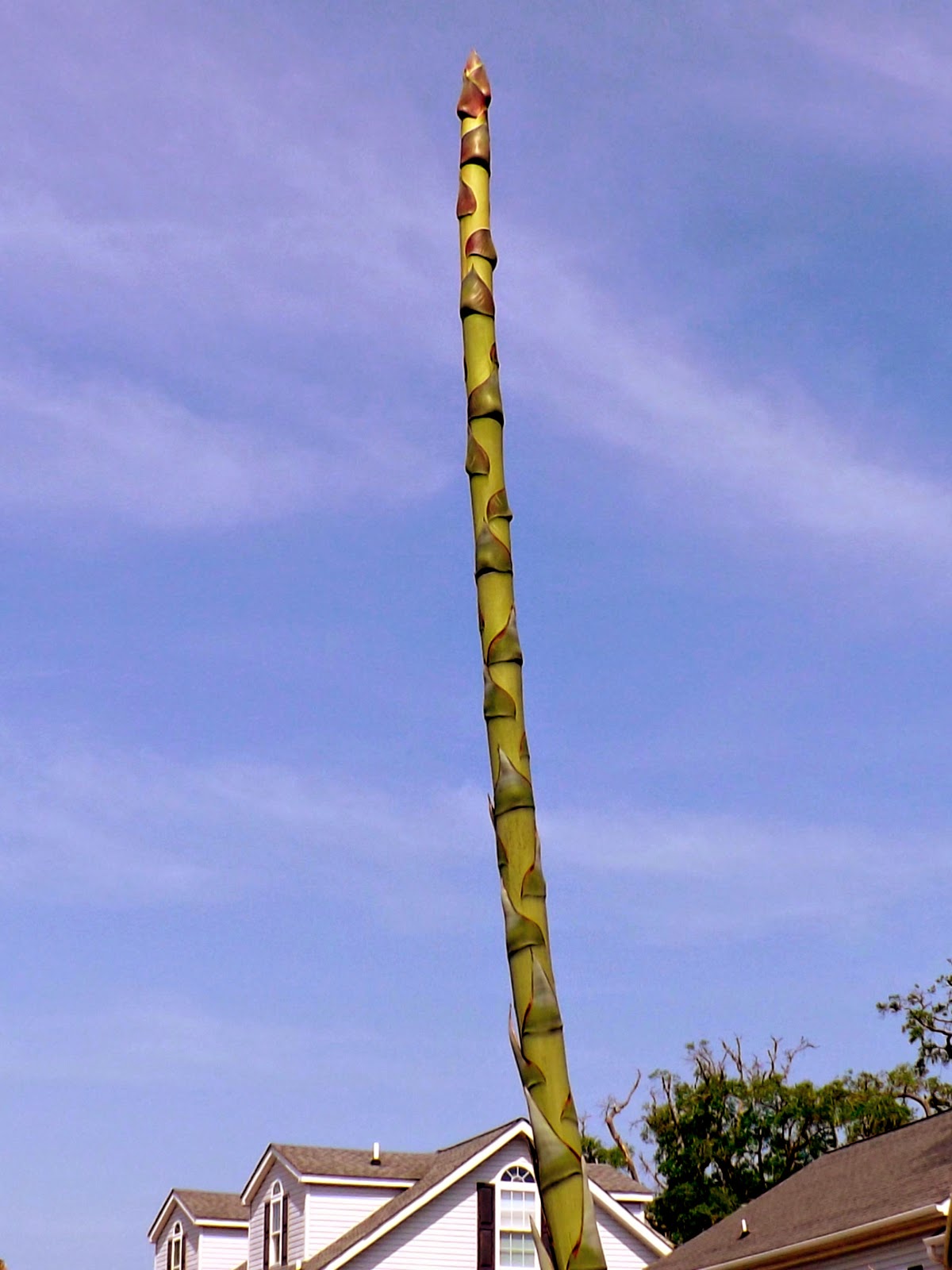
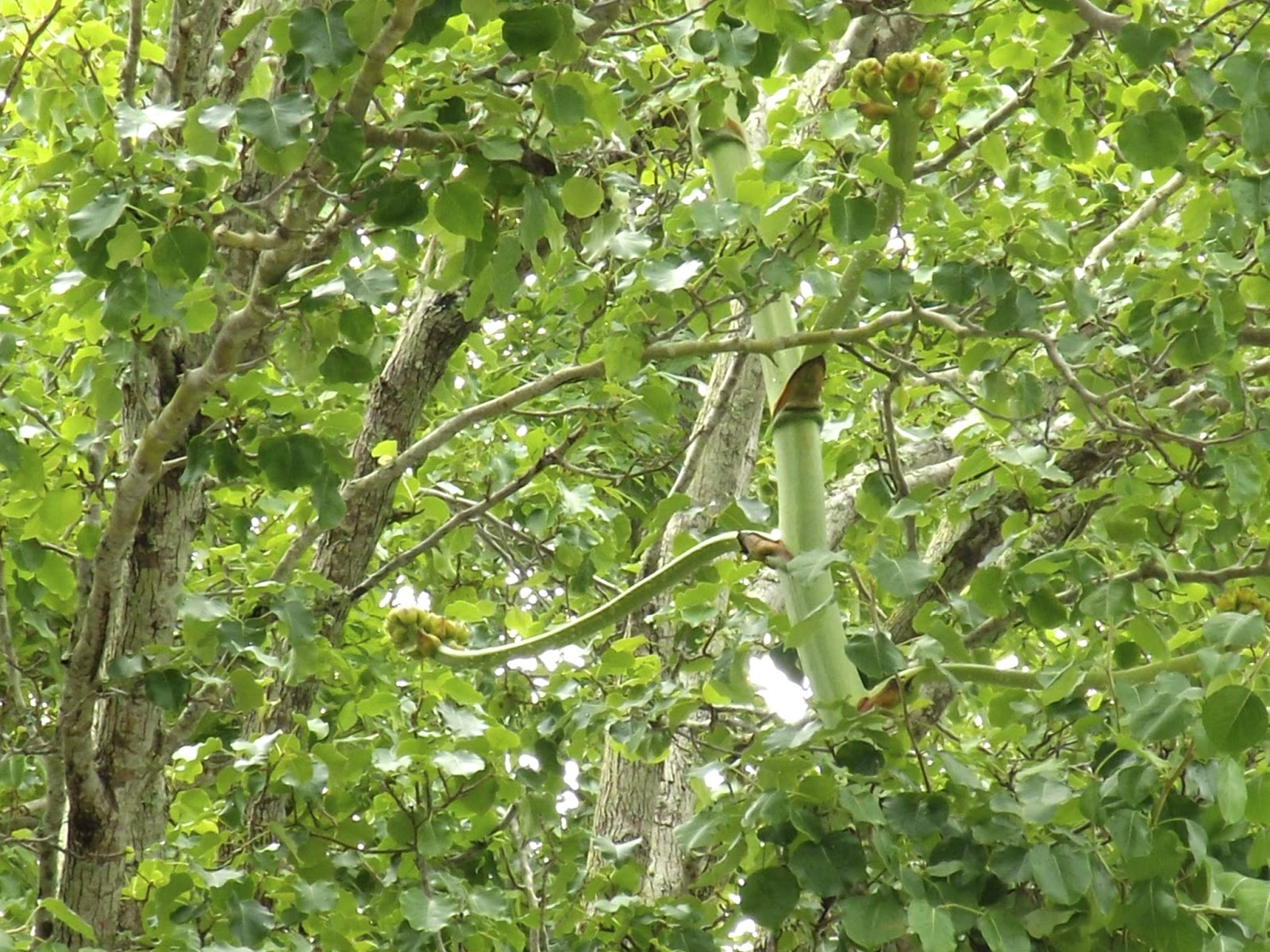
My friend, who still lives in SC near where we used to live has graciously sent me the final bloom pictures of the Agave plant. The last photo I took was on June 17. We left on the 19th.
She snapped these on July 5th; therefore, it took almost 3 weeks to reach the final stages of its life. 


Notice on the lowest branch the flowers are dead already.
Click on image to view larger
If you'd like to review the previous development and growth, check out my post here:
http://nookworm-connectionsmore.blogspot.com/2015/06/agave-bloom-2015-hd.html

Thursday, June 18, 2015

Agave Bloom 2015 HD

OMG! Please notice I was so excited to finish this slide show that I made a mistake BEFORE sending to YouTube. Can you find it?


Hint!   I thought I was perfect and knew how old I am. Guess not!

Wednesday, May 13, 2015

Agave AGAIN!

Sure hope I stay long enough to see this bloom!
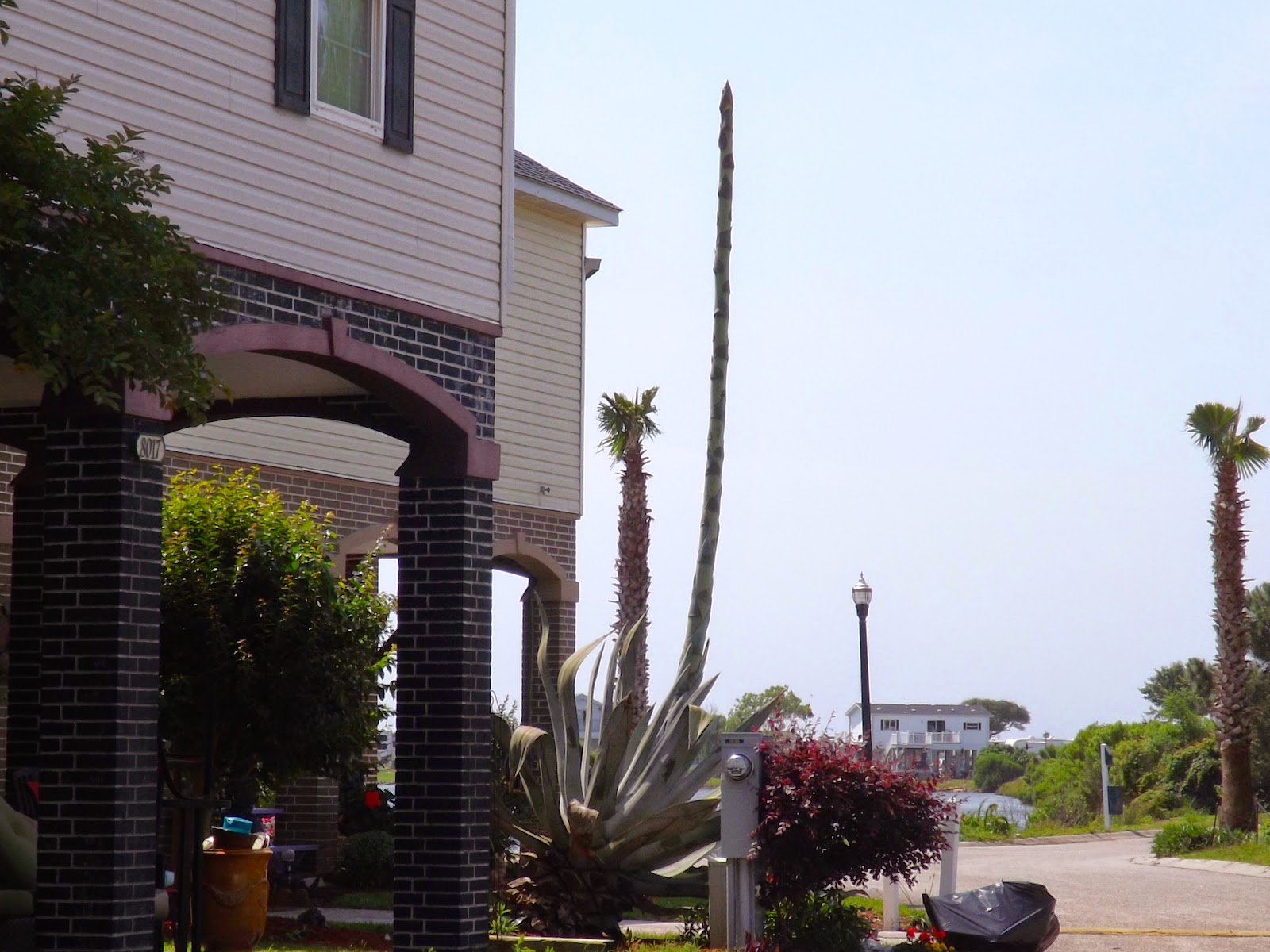
This time it is located in an open area "up on hill" and not hidden in trees like the previous one.
I will post again as it grows and develops further. 

The owner told me the plant is only 4 years old! So much for being called "the century plant!"


The "pups" are already emerging at the base of the plant.


To review the first one I came across and the blogs about it click on the links.

#1
#2
#3
#4
#5

Thursday, June 13, 2013

Magnificent Plant More.....

The plant blossom stem (flower spike) I have been watching grow has grown so high and is now up into the tree that I can hardly see the arms reaching out from the main spear stalk! There are blossom heads on each of those long arms. I simply cannot take good pictures of them because they blend in with the tree so much and are concealed from the ground. The photos below were taken on June 6.         Click on photo to view larger.


I have found a site which has many beautiful photographs of this plant. Please go to the site and you will surely be surprised. Be sure to scroll down to the end of the page and you will see the whole process - even  after the main plant dies and the "pups" are visible.

You may now understand why this plant has captured my attention.

http://www.xericworld.com/forums/showthread.php?p=18986&mode=linear#post18986

Monday, June 3, 2013

Magnificent Plant...UPDATE


I found this information on the internet but didn't keep the source page. It is very interesting to me and I'd like to share with you. Today's photos are at the bottom of the page. It is all developing fast!

"Agave Flowers:  Agave plants bear flowers on extremely long stalks, or inflorescences. Many experts describe these stalks as asparagus-like, though the tallest of them resemble trees as much as they do asparagus. Agave stalks grow from the center of the flower and reach mature heights of 6 to 40 feet. It takes at least 10 to 15 years for an agave plant to flower. The triggering mechanism for agave blossoming is unknown. No one knows why they flower when they do, or when a specimen will flower.

Flowering Habit:  Agaves have a monocarpic flowering habit. This means that a single agave plant flowers once and dies immediately after flowering. When agave plants die, they leave offsets, commonly called pups, in the soil as a means of propagation. Agave offsets resemble new plants growing alongside full-grown plants, but actually constitute new growths sprouting from the roots of the mother plant. When the mother plant dies, these offsets stay alive and grow into independent agave specimens that eventually flower and create offsets themselves.

Flower Description:  Agave plants bear elongated, tubular flowers on leafless branches or, as is the case with certain species, on single, spiked stalks. These flowers appear in various colors depending on the species of agave, though are usually yellow, rose or white. Flowers blossom at the terminal end, or absolute end point, of branches and may be spread in a diameter as wide as 6 feet from the central stalk.

How to Remove Babies From a Large Agave:
Gardeners with poor soil or those who live in hot, arid conditions can grow agave plants successfully. The plants need little water and no fertilizer, and you will never have to prune them. Agave varies in size according to the species, with the tallest growing to 12 feet tall. After the agave flowers, it dies, but you can save the small plants that it produces, known as "pups," and grow new agave plants.

Instructions:
Cut the pup from the mother plant, taking with it a small piece of the connecting stem. If the plant is so large that working near it is unsafe, dig a trench around the portion of the pup that you can reach, and use the spade to slice it from the mother.
Cut the roots on the pup to 1/4 inch in length.
Push the pup into the cactus potting mix in a 1-gallon container."


Sunday, June 2, 2013

Magnificent Plant Continued...

Well it has been almost a full month since I showed you the Agave plant I saw pushing up an interesting stalk. The May 6th post was called "Magnificent Plant." I have ridden by it regularly and it just kept growing taller - right into the treetops where it can touch the sun peeking through. It now has what I call a blossom head. Maybe the flowers will open soon. I'll keep watching. It is becoming much more difficult to photograph as I don't have a zoom lens and cannot climb a ladder!


Monday, May 6, 2013

Magnificent Plant

All I can say is that I sure hope it blooms while I'm here!

Never before, in the 15 years that I have been here for the length of time consisting of 2 months in May and June has this plant EVER produced this stalk. How exciting to think that it may bloom before I return  to PA. It actually looks like a GIANT asparagus.

What do you think?


agave [əˈgeɪvɪ ˈægeɪv]
n
(Life Sciences & Allied Applications / Plants) any plant of the genus Agave, native to tropical America, with tall flower stalks rising from a massive, often armed, rosette of thick fleshy leaves: family Agavaceae. Some species are the source of fibres such as sisal or of alcoholic beverages such as pulque and tequila See also century plant

century plant
n
(Life Sciences & Allied Applications / Plants) an agave, Agave americana, native to tropical America but naturalized elsewhere, having very large spiny greyish leaves and greenish flowers on a tall fleshy stalk. It blooms only once in its life, after 10 to 30 years (formerly thought to flower after a century) Also called American aloe